Who Decides the Future? Intergenerational Perspectives on Disarmament

Who Decides the Future? Intergenerational Perspectives on Disarmament

Monalisa Hazarika

strategic communications and partnership officer, SCRAP Weapons

On 11 December 2025, SCRAP Weapons, in partnership with the Inter-Parliamentary Union (IPU), convened the two-part webinar series, “Parliaments and the Next Generation: A Shared Agenda for Disarmament.” The event brought together parliamentarians, policy experts, youth leaders, and civil society practitioners to explore how intergenerational dialogue can strengthen parliamentary leadership on disarmament, arms control, and emerging security challenges.

Arthur Duforest, Inter-Parliamentary Union

Across both sessions, speakers emphasized that youth engagement in disarmament is not symbolic, but essential to informed, future-oriented policymaking. As one IPU representative noted, “young people are not asking for a seat at the table out of courtesy — they are already doing the work, producing research, and shaping debates that parliaments must now take seriously.” This framing resonated throughout discussions on nuclear risk, military spending, and the governance of new technologies.

Sean Conner, Executive Director (International Peace Bureau)

A central theme was the unique responsibility of parliaments in translating international disarmament commitments into national action. Speakers highlighted parliamentary oversight of defence budgets, export controls, and arms control implementation as critical levers for accountability. One panelist stressed that “without parliamentary scrutiny, disarmament commitments remain aspirational rather than operational.” The discussion reinforced IPU’s long-standing position that transparent, evidence-based oversight of military expenditure is fundamental to preventing arms races and aligning security policy with human security priorities.

Youth speakers and early-career experts underscored the long-term consequences of today’s security decisions. As one participant observed, “the weapons policies being decided now will shape the risks we inherit — from nuclear escalation to the militarisation of artificial intelligence.” This intergenerational lens was particularly evident in conversations on emerging technologies, where participants warned that existing governance frameworks are lagging behind rapid advances in AI-enabled targeting, autonomous systems, and cyber capabilities.

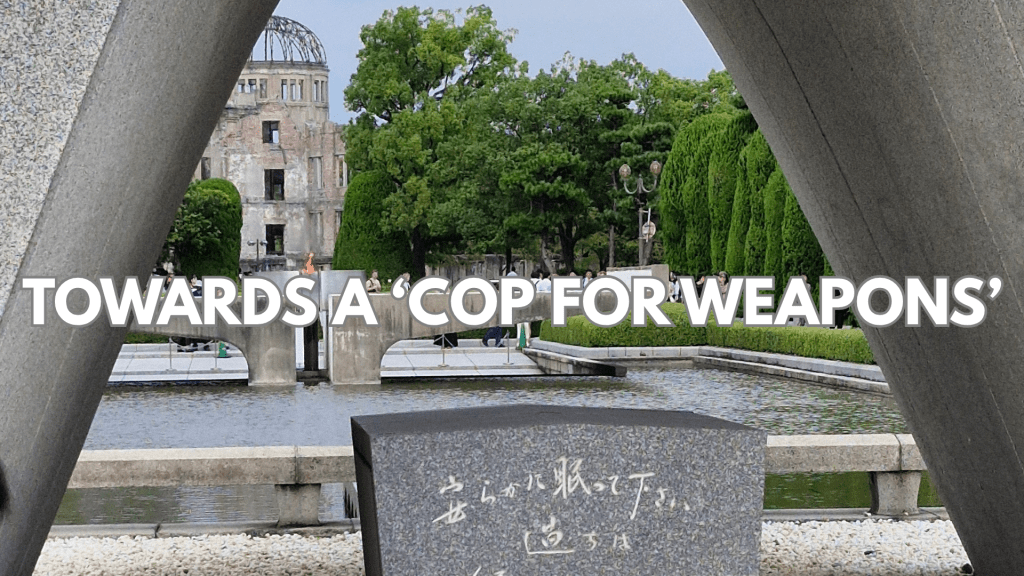
SCRAP Weapons used the platform to advance its call for innovative, inclusive approaches to global weapons governance. Speakers reflected on the need to move beyond stalled multilateral forums and explore new models for sustained dialogue and accountability. Referencing the organisation’s ongoing work, SCRAP’s Strategic Communication and Partnership Officer, Monalisa Hazarika, remarked that “we need processes that keep political attention alive even when consensus is difficult — something closer to a COP-style process for weapons governance.” This idea sparked discussion on how parliaments could champion continuity, transparency, and inclusive participation across disarmament processes.

The webinars concluded with a shared recognition that intergenerational cooperation is not optional but necessary. As one closing reflection captured, “the credibility of disarmament efforts depends on whether institutions are willing to listen to those who will live longest with the consequences.”

The event reaffirmed SCRAP Weapons’ commitment to amplifying youth expertise, supporting parliamentary leadership, and fostering innovative thinking on disarmament. Outcomes from the discussions will inform future SCRAP-IPU collaboration, including continued advocacy for stronger parliamentary engagement, youth-inclusive processes, and renewed multilateral dialogue on global weapons governance.

Monalisa Hazarika

Strategic communications and partnership officer, SCRAP Weapons