

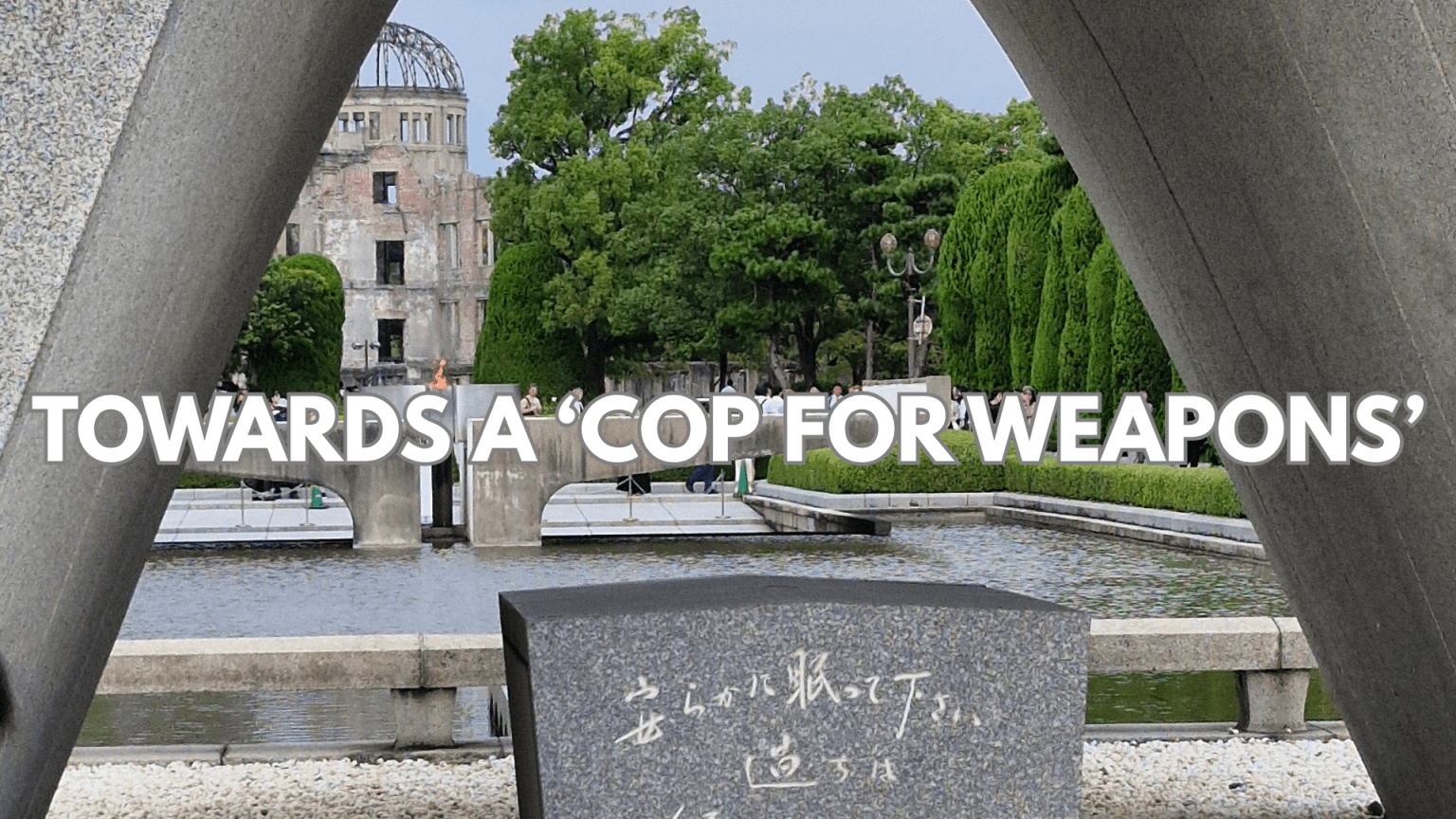
Why a 'COP for Weapons'?
The global security architecture is facing unprecedented strain. The erosion of the law-based international order, coupled with increasing reliance on military force by major powers, has created a dangerous environment reminiscent of pre-Cold War instability. The resurgence of great power rivalry, unchecked militarization, and technological arms races, including nuclear weapons, is accelerating insecurity worldwide.
For the first time since the Cuban Missile Crisis, a global arms race is unfolding without any meaningful dialogue to curb its escalation. Despite decades of disarmament efforts, the current multilateral arms control negotiations remain highly polarized and stagnant. Existing forums such as the UNGA First Committee, the Conference on Disarmament, and other treaty-based mechanisms struggle with limited inclusivity and procedural deadlock. Meanwhile, rising military expenditures are intensifying global insecurity — from driving nuclear instability to fueling violence through the proliferation and misuse of SALW — and worsening humanitarian and regional crises worldwide. With the New START Treaty set to expire in February 2026, the need for renewed dialogue and concrete measures has never been more urgent.
In this context, the Fourth Special Session of the UN General Assembly on Disarmament (SSOD-IV) represents an urgent opportunity to reinvigorate multilateral dialogue, address contemporary security challenges, and create a framework for accountability similar to a “COP for Weapons.” As the world marks 80 years since the atomic bombings of Hiroshima and Nagasaki, and with the next NPT Review Conference scheduled for 2026, the time to act is now.
The Conference of the Parties (COP) processes foster sustained dialogue, iterative commitments, and inclusive participation from states, civil society, youth, and indigenous communities. Despite lacking unanimous outcomes, they demonstrate that process matters as well as agreement: dialogue sustains political attention, promotes accountability, and keeps momentum alive even amid disagreement.SCRAP Weapons will be exploring how lessons from environmental and sustainable development governance can inform the design of a “COP for Weapons.” The aim is not to duplicate existing disarmament mechanisms but to reimagine dialogue and concrete outcomes that enable continuity, inclusivity, and innovation in global weapons governance.
How to contribute?

In November 2025, SCRAP Weapons launched a global youth competition to engage the next generation of thinkers and practitioners in shaping innovative approaches to disarmament. This competition seeks to amplify youth voices and creativity in reimagining what such a process could and should look like.
Participants, aged 18-30, were invited to visualize and conceptualize the structure, processes, and strategies that a ‘COP for Weapons’ might entail, focusing on inclusivity, sustainability, and effectiveness. Not bounded by any prescribed format and encouraging creative expression and artistic freedom, we welcomed submissions that explored disarmament and global security through diverse analytical, narrative, and imaginative approaches. Submissions were invited to:
- Address the concept of a “COP for Weapons” and its practical or symbolic significance.
- Highlight key necessities for inclusivity and sustainability (e.g., youth participation, gender equity, regional diversity, accountability mechanisms)
- Propose innovative strategies or frameworks to make such a process effective.
WINNING ESSAYS OF THE GLOBAL YOUTH CONTEST
Guilherme Setokushi Ferreira, Joel Naoki Ernesto Christoph, Thelma Kergroach, and Olusola Rolake George
2026
This publication brings together the winning submissions of the SCRAP Global Youth Competition titled “Imagining a ‘COP for Weapons’”. The essays included herein are reproduced with the permission of their respective authors and remain the intellectual property of the individual contributors. All rights are reserved by the authors unless otherwise indicated.